
Let them eat Nvidia chips
A review of "Capital in the 22nd Century"


At the end of 2025, Dwarkesh Patel and Philip Trammell published a mildly controversial post about the impact of AI on the complementary/antagonistic relationship between capital and labor. You can read the full post here, but their argument goes this way:
AI investments are increasingly private ventures that are not available to everyday people.
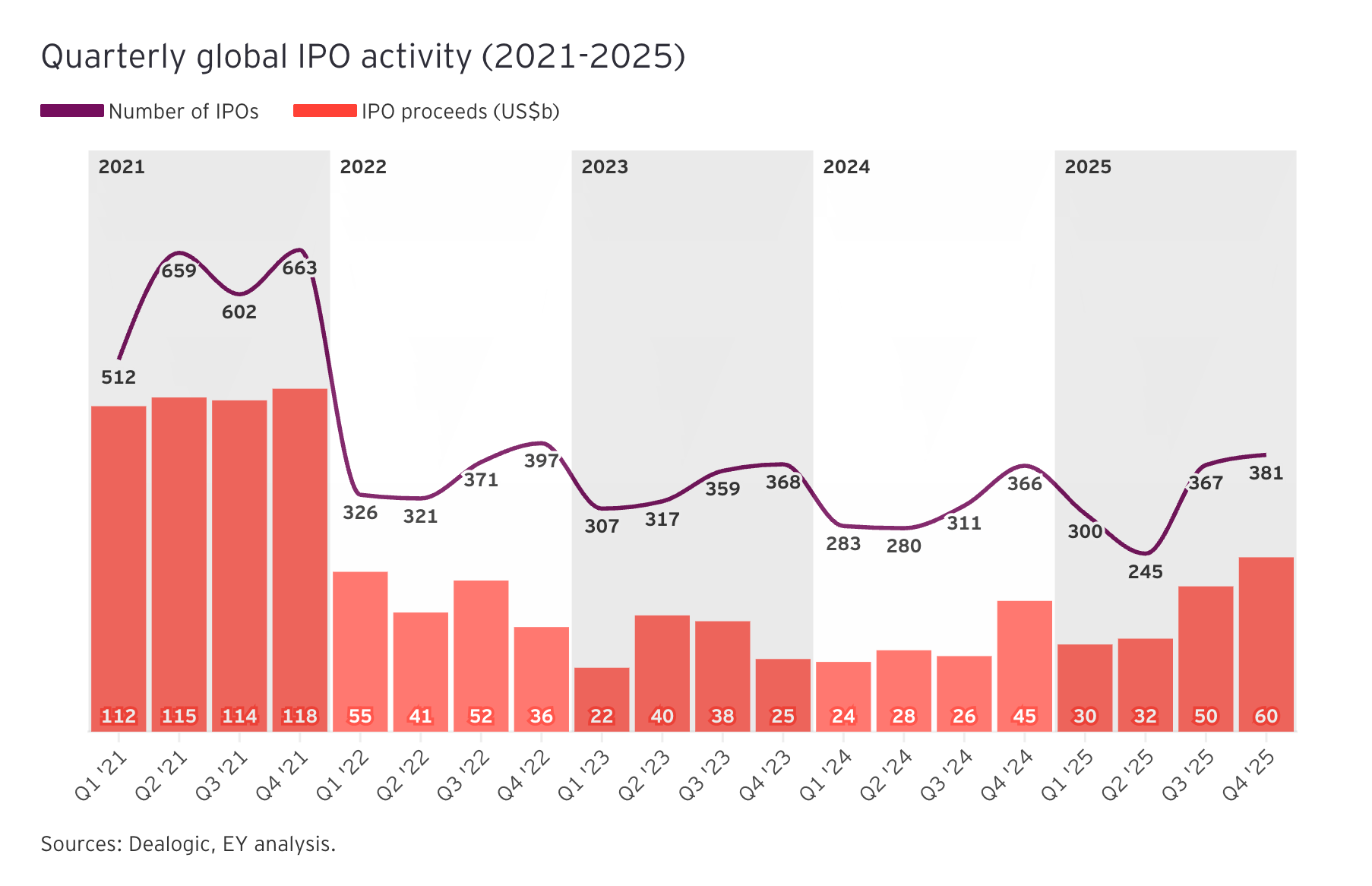
Indeed, the number of IPOs decreased significantly after 2021, as more and more companies decide to stay private. Databricks raised a Series L round of $4B, which is one of the “biggest letters” I recall for a funding round
If AI becomes embodied AGI, it will render capital a true substitute for labor. This means that capital owners will reach escape velocity: they will own all the robots that make all the goods and services, and they will not need the rest of humans for anything.
Therefore, the only way to prevent inequality from becoming extreme is a global and highly progressive tax on capital (or capital income). Otherwise, the state or ruling elite will live in Elysium, suppressing any attempt at insurgence with their robotic army of Terminators.
Ben Thompson has a rebuttal here, where he considers this scenario implausible. One of his arguments is that we have had many technological revolutions in the past, with many types of jobs displaced or eliminated by new tech, but humans always found a way to create new jobs. Podcasters like Dwarkesh did not exist 20 years ago. Maybe this time is different, and AI will really replace all workers, both physical and knowledge workers, but so far history has not gone that way.
Another argument is that AI will not be better than humans at everything, and for some jobs humans will retain an edge over AI. For example, podcasting (again) is likely to remain a human activity even in this AGI scenario.
Noah Smith has a similar argument here, but more from a resource constraints perspective. Even if AI is better than humans at everything, it would be constrained by energy and compute limits, so we will have to prioritize the tasks with the highest ROI and leave the rest to humans, even if they are actually worse than AI.
In my opinion, the main counterargument to the post by Dwarkesh and Trammell is that they do not focus enough on the transition from the current state to the end state. Even if AI will be better than any humans and it will have infinite resources, the only way to transition to this end state, where capital owners are in Elysium and the rest of humanity starves to death under the watch of an army of killer robots, is if it happens overnight. One day people wake up and there are T-1000s everywhere, and any rebellion is suppressed. Then yes, everybody is fucked.
If that is not the case, there will necessarily be redistribution measures implemented along the way, or, like Ben Thompson says:
it seems odd that AI would acquire such fantastic capabilities and yet still be controlled by humans and governed by property laws as commonly understood in 2025
Think about it. It is fair to say that every single human being in the developed world is better off today, in 2026, than at any previous point in time. The lowest 1% of the income distribution in 2026 has better healthcare, education, and entertainment than the king of France right before the Revolution. And yet, almost everywhere, the people in office are from populist parties that leveraged some kind of grievance. Not enough of this, too much of that, every political agenda is based on anger and revanchism.
We are still immensely far away from the doomist end state of Dwarkesh and Trammell, and yet we are already flirting with populist and authoritarian leaders. Of course there will be an uprising and a revolution before this end state is reached. Of course someone who claims to counterbalance that will be voted in, or will take power with a coup, before the robotic army becomes a thing. Humans will not sit idle like sheep, seeing their conditions deteriorate significantly, and peacefully accepting it.
Do you like this post? Of course you do. Share it on Twitter/X, LinkedIn and HackerNews